
In this article
In this article
Cloud environments have become one of the most valuable places for attackers to explore. A compromised account, exposed service or foothold inside a VPC can lead to databases, internal APIs, Kubernetes infrastructure, object storage and software delivery systems.
The challenge for defenders is that these environments are busy. Legitimate systems are constantly communicating. Developers deploy new services. Applications query databases. Containers pull images. APIs generate traffic around the clock. That can make it difficult to distinguish unusual activity from normal cloud behavior.
Tero approaches the problem differently. Instead of asking security teams to identify every suspicious interaction inside legitimate infrastructure, we introduce realistic systems that nobody should be interacting with in the first place. That changes the signal.
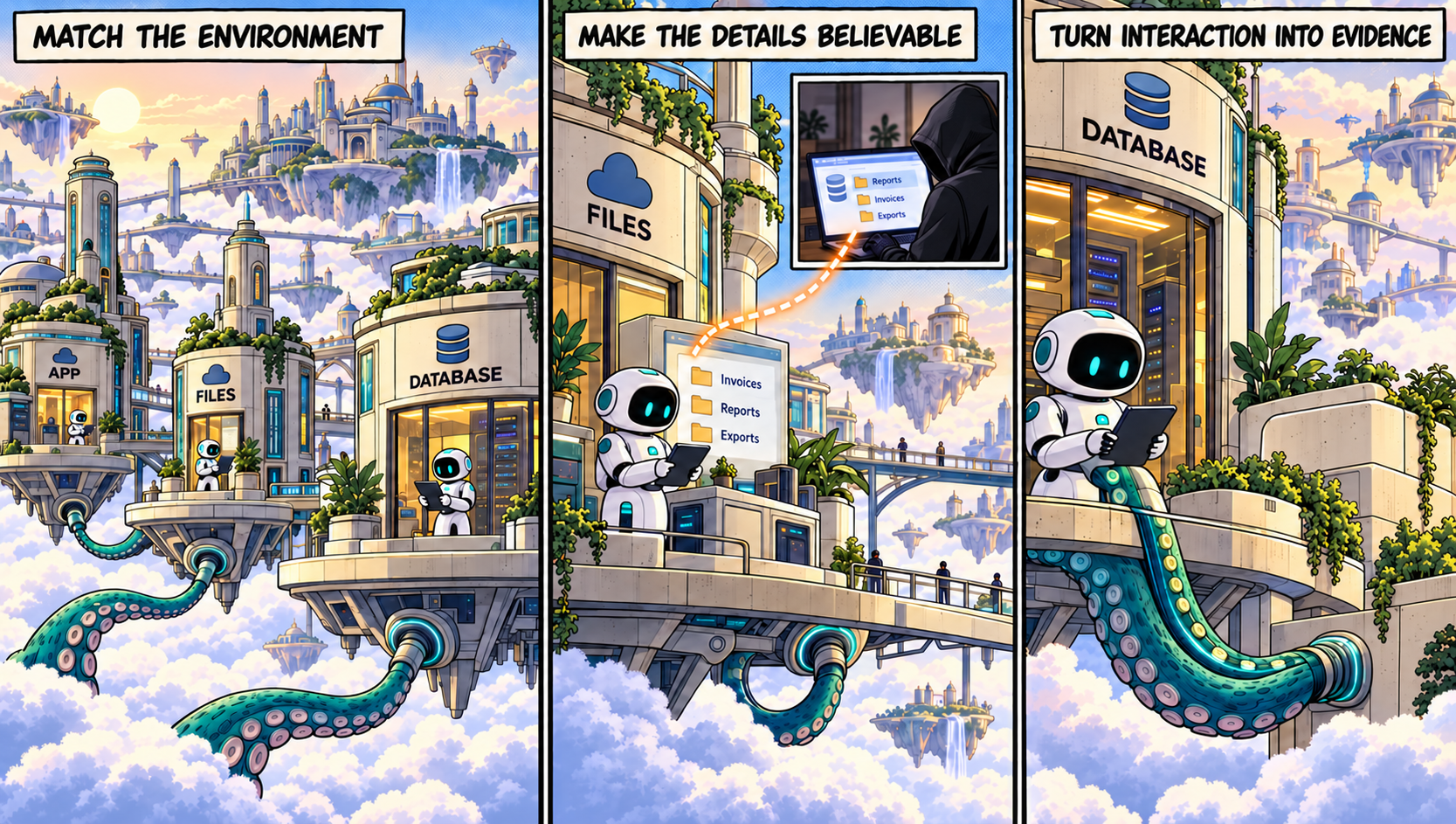
A cloud environment designed for detection
A Tero Cloud/VPC environment can include decoys representing services an attacker would reasonably expect to discover inside modern cloud infrastructure:
- Kubernetes API
- Redis
- MongoDB
- Object Storage
- Docker Registry
- Internal API
These are not randomly scattered traps. They are designed to look like pieces of the same environment. Imagine an attacker discovers what appears to be a MongoDB instance:
mongo-01.company.internalThey begin exploring it. The data suggests the database belongs to an internal application. That application references a Redis cache. The Kubernetes environment references container images from an internal registry. Object storage contains believable application artifacts and exports. The internal API appears to belong to the same services.
Suddenly the attacker is not looking at one isolated decoy. They are exploring what appears to be a real cloud estate. That is where Tero becomes valuable.
MongoDB is only the beginning
Take MongoDB as an example. A MongoDB decoy can appear like a normal internal database service, with believable databases, collections and application relationships. Someone scanning the network sees what looks like an ordinary cloud database. Someone investigating further sees information that feels consistent with the environment around it.
But the service contains synthetic data. It does not expose the customer's real production database. And there is almost no legitimate reason for someone to query it. So when interaction happens, Tero gains a very different kind of signal. Instead of:
““This database request might be suspicious.”
the question becomes:
““Why is anyone querying this database at all?”
That distinction is powerful.
Decoys that tell the same story
Believability becomes much stronger when systems reinforce one another. For example:
Kubernetes
    ↓
references an internal container image

Docker Registry
    ↓
contains that repository and version

Application configuration
    ↓
references MongoDB and Redis

MongoDB
    ↓
contains matching application records

Internal API
    ↓
represents the same service environment

Object Storage
    ↓
contains believable exports and artifacts
To someone investigating the environment, these relationships make sense. The systems appear to belong together. That matters because attackers rarely stop after finding one service. They follow clues. Tero is designed to make those clues useful to the defender.
For a deeper look at why consistency matters, read How to Implement Decoys That Attackers Actually Believe.
High-confidence signals without touching production
The objective is not to deliberately weaken your production infrastructure. The Cloud/VPC decoys exist separately from real customer systems. They can contain:
- synthetic business information
- fictional infrastructure relationships
- realistic service identities
- believable application data
- controlled authentication boundaries
without containing real production secrets or customer data. That means an attacker can encounter something worth investigating while the security team gains visibility into that activity. Your real cloud estate remains separate.
Detect exploration earlier
Many security controls become most valuable once something clearly malicious has happened. A workload is compromised. Credentials are abused. A production database is queried. A container behaves unexpectedly.
Tero creates another opportunity for detection: the exploration that happens before those outcomes. An attacker looking for databases may find MongoDB. Someone enumerating cloud services may encounter Kubernetes. Someone hunting for application infrastructure may discover the internal registry or API. Those interactions can reveal intent while the attacker still believes they are gathering information. That gives defenders an opportunity to investigate earlier.
One Sensor, multiple detection opportunities
The customer experience remains simple. A Tero Sensor is deployed into the environment. From there, the security team can add the decoys appropriate to that location.
Cloud / VPC
│
├── Kubernetes API
├── Redis
├── MongoDB
├── Object Storage
├── Docker Registry
└── Internal API
Tero handles the infrastructure behind those services while the customer manages them centrally through the platform. The result is a cloud environment built not around additional production complexity, but around visibility and evidence.
Make the cloud harder to explore quietly
Attackers benefit when they can move through an environment without generating a clear signal. Decoys change that equation. When realistic infrastructure exists specifically for detection, reconnaissance itself becomes useful evidence. That is the idea behind Tero's Cloud/VPC environment: give attackers something believable to find — and give defenders a reason to know the moment they find it.
If you want to understand the design principles behind these systems, continue with:
How to Implement Decoys That Attackers Actually Believe →
And if you want to see MongoDB, Kubernetes, Redis and the rest of the Cloud/VPC environment working together: