
01 / Discovery
A business service draws interest.
Someone discovers an internal reporting service, finance share or business portal represented by a Tero Decoy.
Tero deploys realistic Decoys around reporting databases, finance shares and internal business portals. Reveal suspicious exploration and give your security team the recorded requests, outcomes and context to investigate.
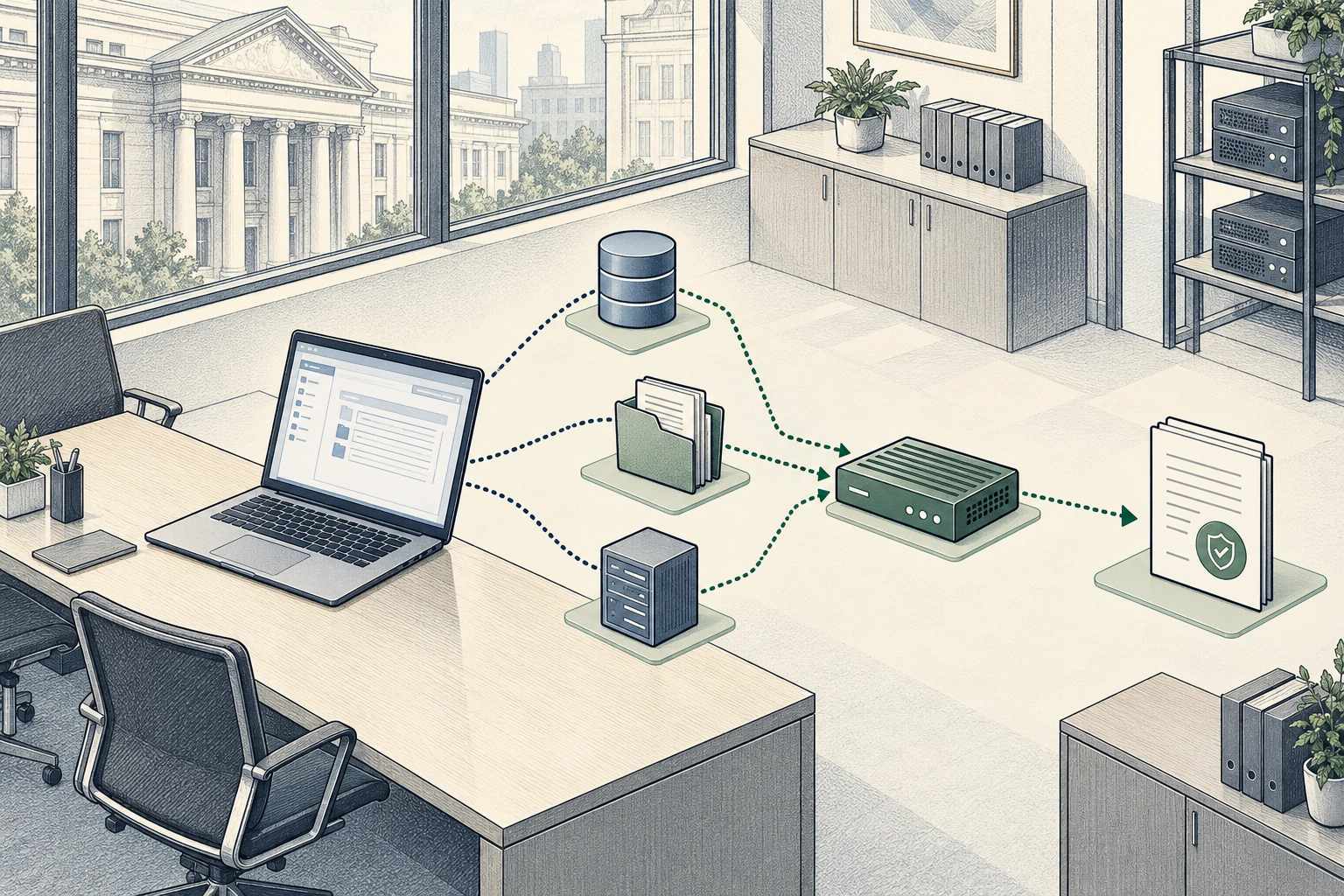
Reveal unwanted exploration.Watch access to realistic business Decoys.
Keep each interaction in context.Link requests to the service and deployment.
Investigate the observed outcome.Distinguish an attempt from a response.
A reporting database or finance workspace can look like a useful resource to an intruder. A Decoy gives that exploration a believable setting and your team a sequence to investigate.

Someone discovers an internal reporting service, finance share or business portal represented by a Tero Decoy.
Synthetic records give the service a credible purpose. Supported interactions capture requested actions and observed responses.
Review the observed source, target and session alongside the service, Sensor and business environment involved.
Choose relevant Decoys for approved reporting, administrative and business-support segments. Keep the deployment focused on the resources worth exploring.
Represent reporting databases and business-reporting services with synthetic financial records. Follow supported authentication, discovery and query activity.
Make selected finance shares and document workspaces look relevant. Record browsing, access attempts and supported file-operation outcomes.
Represent supported business portals, supplier exchanges and administrative access services. Keep suspicious interactions tied to their deployment context.
Capability availability depends on the verified Sensor release and host requirements. Use synthetic business records rather than customer, account or production data.
Your team can follow the sequence from discovery to a requested change. Tero links the operations and observed responses to the Decoy and business environment involved.
Recorded activity against a Decoy with synthetic financial records.
SELECT … FROM information_schema.tablesSELECT … FROM reporting.accounts_receivableUPDATE accounting.invoices …Human identity, data theft and production impact remain unconfirmed.
Place a Sensor on an approved, supported host in your office, on-premises or supported cloud environment. Configure private access to the Decoys for the clients you want to observe.
Select reporting, administrative or support segments with the infrastructure owners.
Choose supported Decoys and realistic synthetic records for the selected workflows.
Test from a separate client and confirm readiness, source attribution and recorded outcomes.
Visibility is scoped to interactions with the deployed Decoys. Review network reachability and evidence handling for each environment.
No. Use synthetic business records and documents in Decoys. Do not copy customer information, account details, payment data or production credentials into them.
This solution records interactions with supported Decoys representing internal business services. It does not claim monitoring of live payments, transaction fraud or trading activity.
Review recorded requests, sessions, observed-source information and outcomes with the associated environment. Your team assesses the evidence and decides what further investigation or response is appropriate.
Decoy readiness, separate-client access, source attribution, correct business context, recorded responses and the investigation workflow. Agree evidence-handling requirements with your security team.
Tell us about the reporting and internal services you want to monitor. We’ll help you plan a focused detection layer around your financial operations.
Plan your deploymentStart with a defined scope. Verify the evidence.