
In this article
In this article
Someone Touched What They Shouldn’t. Would You Know?
An unfamiliar person tries a door in your office. Someone opens a drawer containing documents they have no reason to use. You would want to know.
The same question matters inside your network.
If someone opens a convincing decoy file, attempts to access a decoy portal or interacts with a decoy service, what brings that activity to your attention?
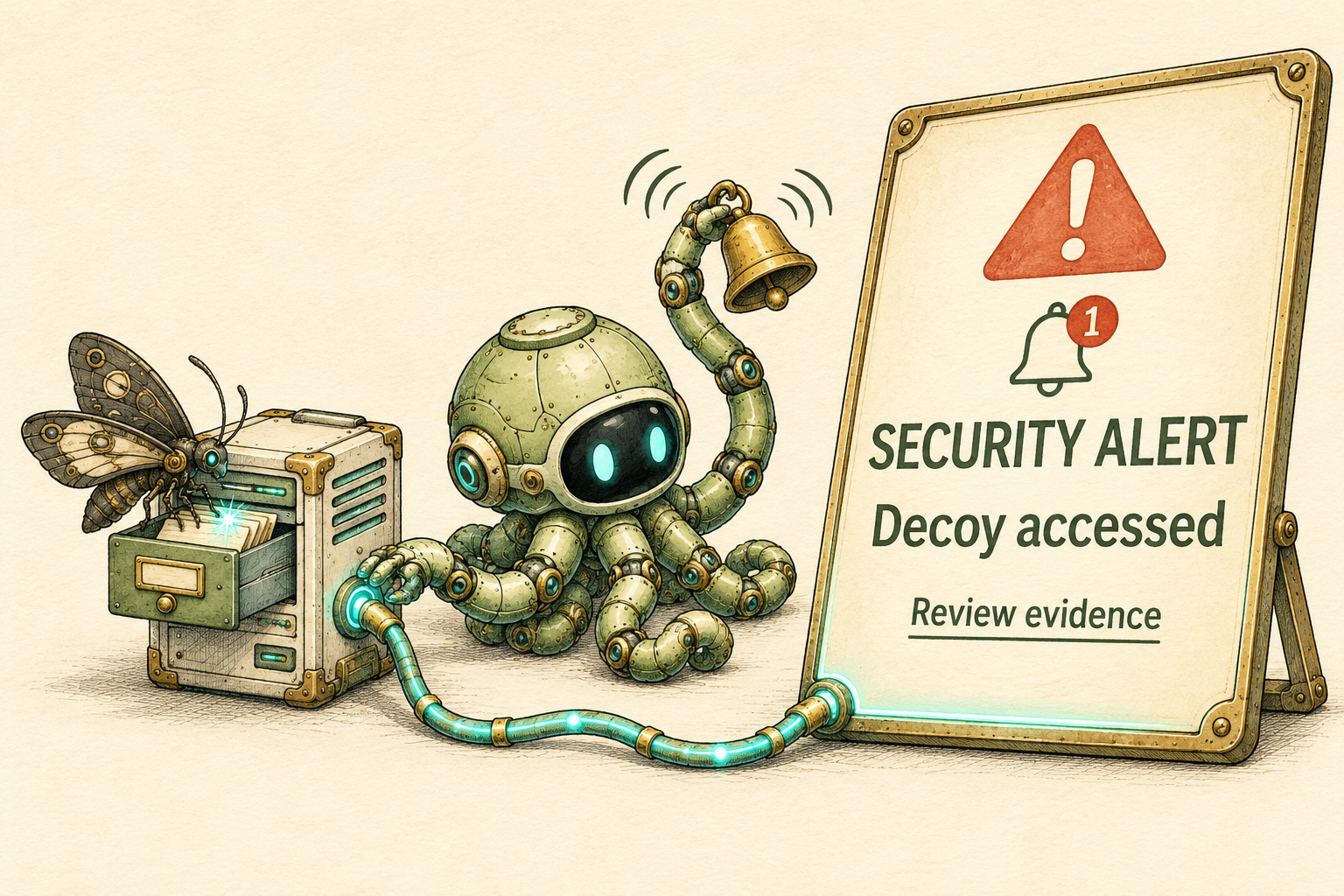
Tero turns relevant decoy interactions into security alerts, giving your team a specific event and supporting evidence to investigate.
Give unexpected activity somewhere to reveal itself
A decoy looks like something that belongs in the environment: a file, an internal portal, a database or another service someone exploring the network might find interesting.
It is separate from the systems and information your organization uses for its work. Its purpose is to make interaction observable.
That distinction gives the alert context. Your team knows what the resource is for and why an unexpected interaction with it deserves a closer look.
You are not waiting for someone to report a missing document or an unavailable service. You have a signal from a resource placed specifically to reveal exploration.
From interaction to alert
Imagine someone has gained access to part of your environment. They begin looking around and discover a portal that appears useful. They attempt to sign in.
The portal is a Tero Decoy. The relevant interaction is recorded, and Tero raises an alert with the evidence available from that activity.
Your team can open the alert and examine what happened. Depending on the decoy and interaction, that context can include:
- The decoy involved and its environment.
- When the interaction was recorded.
- The observed action, such as an access or authentication attempt.
- Available source and protocol details.
- Links to the supporting evidence and related investigation.
The notification draws attention to the event. The evidence helps the team decide what to do next.
An alert should explain why it matters
“Suspicious activity detected” leaves the person investigating with most of the work still ahead.
A useful alert starts with something concrete: an interaction with a particular decoy, at a particular time, involving an action the system recorded.
That gives your team a starting point for practical questions. Was this an approved security scan? Was an administrator performing maintenance? Does the source relate to other activity worth examining?
Tero connects alerts with their evidence so the investigation can begin with the observation that triggered attention.
Detect interest without using genuine sensitive information
A decoy can resemble an attractive resource without holding the real information an attacker hopes to find.
A document can suggest valuable business material. A portal can resemble an internal service. A database can present a convincing surface for exploration.
The aim is to create an opportunity to observe unwanted interest while keeping genuine customer records, financial information and other sensitive material out of the decoy itself.
Your business information remains in the systems where it belongs. The decoy provides a separate point of visibility.
Make the signal fit your environment
Placement matters. A decoy should make sense where it appears and remain separate from routine business workflows.
Your team should also understand how approved scanners, administrators and maintenance tools interact with that part of the environment. That context helps distinguish expected activity from something that deserves investigation.
For a small IT team, a decoy alert provides a focused place to start. For an established security team, it adds another piece of evidence to examine alongside existing logs and detection tools.
Know when curiosity becomes something to investigate
An attacker may explore before taking a more disruptive action. A convincing decoy gives that exploration an opportunity to become visible.
Tero helps turn the moment of interaction into an alert your team can open, understand and investigate.
If someone touched a resource they had no reason to use, what would tell you?
Talk to Tero about adding decoy-based detection to your environment.